

 (AGENPARL) - Roma, 11 Luglio 2026 - [NewsMedia_NewsRelease]
Director-General's trip to Canada and the United States focuses on livestock research, soil health practices and environmental stewardship
Calgary and Salt Lake City – Rangelands and the pastoralists who use them have critical roles to play in assuring global food security and environmental stability, QU Dongyu, Director-General of the Food and Agriculture Organization of the United Nations (FAO) said during a four-day visit to western regions of Canada and the United States of America.
The Canadian Cattlemen's Association and the U.S. Roundtable for Sustainable Beef co-convened the North American Grazing Lands Congress to highlight the ecological, economic, and cultural value of North America's historic grazing lands, showcasing the families that steward these landscapes and the innovative ways they support resilient ecosystems. The event took place under the aegis of the U.N.'s International Year of Rangelands and Pastoralists 2026 (IYRP), for which FAO is the lead agency.
Rangelands cover almost half of the earth's land surface, and they support the livelihoods of hundreds of millions of people through livestock production and related activities. "Here, you are not only feeding yourselves but also exporting to feed the rest of the world," the Director-General said in an address at the North American Grazing Lands Congress. In his address he saluted Canada and the United States for their work related to the International Year of Rangelands and Pastoralists and in particular the Director-General recognized "the ranchers who are very passionate about their work".
Qu went on to state that "we need more meat, but with less inputs and less negative impact on the environment … we need milk and meat for good nutrition. Around the world, 80 percent of children in developing countries still do not have a glass of milk per day."
The IYRP, supported by 102 countries on all continents except Antarctica, and more than 400 organizations, aims to increase public awareness of the societal value derived from rangelands, which store almost a third of the world's soil organic carbon, and pastoralists, who mostly turn plants humans can't eat into high-value animal-sourced food, and to advocate for evidence-based policy and legislation to support both in a sustainable way. Dozens more local, regional and international IYRP events are slated in the coming months to share best practices, foster dialogue for improved policies and educate stakeholders including the general public on the vibrant role pastoralists actively play across the world today.
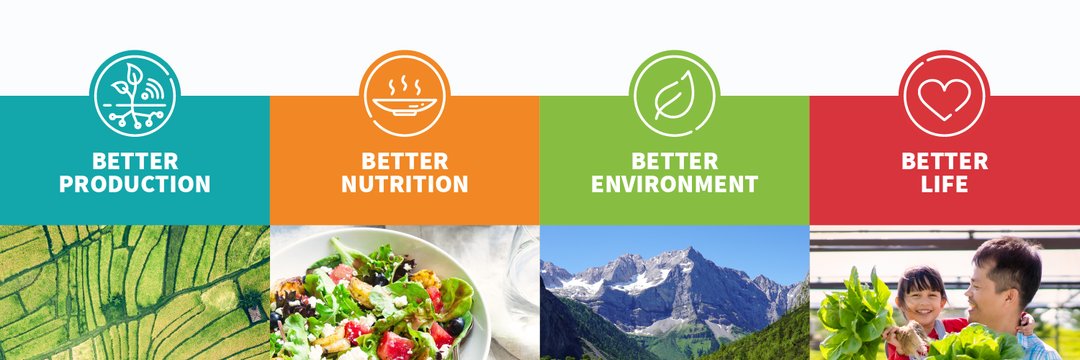
"Let us not stop at Better Production, we must start from there but then work on for all the Four Betters, including Better Nutrition, a Better Environment and a Better Life, leaving no one behind," Qu said.
Canada
FAO's Director-General began his visit in Calgary, touring two nearby iconic ranches, the South Porcupine Ranch, which participated in Canada's 2023 Soil Health Survey, and the 88,000-acre Waldron Grazing Co-operative, comprised primarily of native grass, which holds food value for cattle through the winter and encompasses the largest conservation easement in the country.
Earlier he visited Head Smashed-In Buffalo Jump (Estipah-skikikini-kots in the indigenous Siksika tongue), a nearby UNESCO site featuring an 11-meter cliff used by communal hunters in the region over the last five millennia to drive bison over.
During his visit, the Director-General addressed the North American Grazing Lands Congress with CCA President Tyler Fulton, who runs around several hundred cow-calf pairs on 5,500 acres in the province of Manitoba. He is an advocate for regenerative agriculture practices and improving soil health through the use of high-intensity, short-duration grazing rotations that mimic the way wild roaming bison interacted with rangeland and catalyze accelerated grass growth.
"At FAO, we recognize that ranchers and pastoralists are central to the sustainable management of rangelands and agrifood systems," Qu said, noting that longer and more frequent droughts in North America add urgency to the global challenge of rangeland restoration.
United States
After his visit to Canada, the Director-General flew to Utah, where he visited Utah State University (USU) and visited three specialized teaching and research facilities, one focusing on beef cattle, sheep, goats, alpacas and poultry, one on dairy production, automated milking, animal nutrition and reproduction, waste-handling and animal health, and one focusing on horses.
He also visited the United States Department of Agriculture (USDA's) Agricultural Research Service (ARS) Pollinating Insects Research Unit, based at USU, which conducts cataloging, genome sequencing, and molecular and pollination research on non-honey bees as well as testing how different species interact with different crops.
Speaking with faculty members at the university, Qu emphasized that livestock producers are key to restoring native grasslands and rangelands across North America and, like pastoralists everywhere, warrant support in helping those landscapes deliver natural solutions to changing weather patterns.
"When we support ranchers, pastoralists, and producers, we invest in knowledge and stewardship that sustain these landscapes," he said.
On the U.S. leg of the North American Grazing Lands Congress, the FAO delegation then toured Red Pine Land and Livestock Forest Service Allotment where sheep are grazing native grasslands at more than 9,000 feet during the summer months, and the J. Y. Ferry & Son Grazing Allotment where innovative grazing approaches are helping restore wetlands in the Bear River delta which feeds the Great Salt Lake.
Thanawat Tiensin, FAO Assistant Director-General and Director of FAO's Animal Production and Health Division, presented the Global Plan of Action on Sustainable Livestock Transformation, a voluntary, negotiated policy framework, to attendees. The Plan focuses on a host of issues ranging from ways to assure resilient output and combat animal diseases to ensuring efficient water use, reducing food waste and addressing antimicrobial resistance.
In the evening, Director-General Qu delivered remarks at the closing event held under the International Year of Rangelands and Pastoralists program, featuring a presentation on grazing land conversion in the United States.
"Pastoralists have a long and rich history as the true guardians of the grasslands that they care deeply about, and we saw that firsthand in Alberta and Utah", said Qu.
FAO has been a global leader and champion of sustainable livestock transformation, hosting its first ever Global Conference for Sustainable Livestock Transformation in 2023, and providing technical support to Members across animal genetics and animal health, animal production, antimicrobial resistance, feed safety, legal frameworks and support to livestock producers and pastoralists during emergencies.
International Year of the Woman Farmer
In addition to the IYRP, this year's International Year of the Woman Farmer will help shine a spotlight on the essential roles women play across agrifood systems, including rangelands, and the need to close gaps in access for women to productive inputs, new technology, land tenure and ownership, and financing to reduce food insecurity within families and communities.
Contact
Christopher Emsden
FAO News and Media (Rome)
FAO News and Media
Journalists & editors:
Online tools:
FAO's online newsroom
RSS feed of FAO news releases
