(AGENPARL) - Roma, 7 Ottobre 2024 - (AGENPARL) – lun 07 ottobre 2024 “UN ANELLO VERDE PER LA CITTÀ ANTICA DI POMPEI
Il PARCO RICEVE A WASHINGTON
IL 2024 ASLA PROFESSIONAL AWARD
Le strategie di tutela e valorizzazione delle componenti naturali del patrimonio culturale di Pompei conseguono un nuovo prestigioso riconoscimento internazionale.
Dopo aver ricevuto i riconoscimenti del City’scape International Prize con il Primo Premio nella categoria degli interventi su parchi e giardini storici per il programma strategico di restauro, rigenerazione e cura del Paesaggio di Pompei, e con la Menzione d’Onore nella categoria Tourism Landscape per il progetto “Un Anello Verde per la città antica di Pompei”, questo stesso progetto consegue il 2024 ASLA Professional Award, uno dei più prestigiosi riconoscimenti a livello internazionale nel campo dell’architettura del paesaggio, attribuito per la prima volta ad uno studio italiano, lo Studio Bellesi Giuntoli che ha seguito l’intervento sotto il coordinamento del Parco Archeologico di Pompei diretto da Gabriel Zuchtriegel.
Il premio viene consegnato oggi a Washington.
Il giudizio espresso dalla giuria è il seguente: “A sensitive and interesting approach on how to protect and regulate a heritage site through landscape design”, ovvero “Un approccio sensibile e interessante su come proteggere e regolare un sito del patrimonio culturale attraverso la progettazione del paesaggio”.
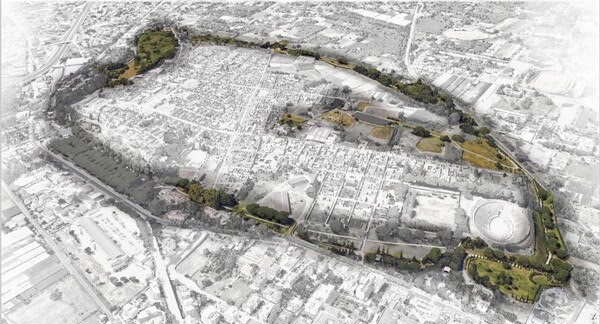
Il progetto mira a trasformare la fruizione del Parco Archeologico e della città di Pompei, stimolando i residenti ed i turisti a vivere attivamente la straordinaria bellezza di questo sito unico. L’Anello Verde intorno al sito archeologico di Pompei diventerà un nuovo paesaggio e un parco lineare che ridistribuirà i flussi di visitatori, riducendo così la pressione sul parco archeologico, proteggendo e valorizzando i resti storici attraverso un intervento di recupero e rigenerazione della componente naturale del patrimonio culturale.
Il progetto prevede la creazione di due circuiti, uno all’interno e uno all’esterno delle mura storiche del sito, quest’ultimo aperto liberamente ai residenti. Iconici elementi del paesaggio storico saranno riutilizzati, mentre specie antiche come il cipresso saranno reintrodotte come punti di riferimento visivi. Il parco migliorerà l’accessibilità per persone con disabilità, connettendo le aree verdi esistenti a quelle di nuova realizzazione, e creerà spazi pubblici destinati a giochi, sosta e relax.
Inoltre, attraverserà le necropoli fuori dalle mura, offrendo viste panoramiche uniche sui resti archeologici, sul Vesuvio, sulla baia e sul paesaggio rurale circostante.
A Green Ring for the ancient city of Pompeii
Award of Excellence: Analysis and Planning
Pompei, Naples, ItalyStudio Bellesi GiuntoliClient: PARCO ARCHEOLOGICO DI POMPEI – Ministero della Cultura
Direttore Generale: Gabriel Zuchtriegelhttps://www.asla.org/2024awards/9373.html
Project CreditsPaolo Mighetto, Project Manager – Archeological Park of Pompeii
Maurizio Bartolini, First Gardener for Archeological Park of Pompeii
Alessandro Marradi, EngineeringConsultingAlberto Giuntoli, PhD. International ASLA, Landscape and Planning
Lorenzo Pacini, Landscape and Planning
Silvia Bellesi, Landscape and Planning
Lorenzo Casulli, Designer
Fabio Villasanta, Landscape and Planning
Martina Simeone, Landscape and Planning
Milena Meniconi, AgronomistGiovanni Minucci, Social ConsultingProject Statement
A green ring of 4 km, surrounding the walls of ancient Pompeii, is planned as a buffer park where necropolises and extra urban Roman villas coexist with agriculture and forests. The park will highlight the site’s historical character while enhancing the quality of the visit, creating inclusive pathways and resting places for the 4 M tourist who visit yearly and for the residents. The Ring, with its new functional areas, will become the main spine of the connection network between the archaeological site and the territory. New view points will connect the ancient city with the landscape of Vesuvius and of the Gulf of Naples while the ecological corridors of the surrounding ecosystems will be integrated in the new green infrastructure.
Project Narrative
Excavation of Pompeii began in the mid 18th century, but just a century later, Giuseppe Fiorelli inspector of the excavations, clarified that the buried city was not just made up of streets and domus, but also of rich gardens. The extensive archaeo-botanical studies, as well as the botanical interpretation of the many plant-themed frescoes of the domus, done by various scientists in the past, have been inestimable documentation for our project. The American archaeologist Wilhelmina FeemsterJashemski, in 1979, contributed significantly to the historical knowledge of Pompeiis flora, with her volume “The Gardens of Pompeii”. Another fundamental figure for the knowledge of the ancient landscape was the biologist and, in the 1980s, manager of the Ministry for Cultural Heritage AnnamariaCiarallo. She wrote the Flora Pompeiana, listing over 200 plant species existing in ancient Roman time and designed, at the end of the 1990s, a pedestrian circuit outside the walls of great landscape value, which was gradually forgotten.
The project for the Green Ring was promoted by the Ministry of Culture (MIC) and by the Pompeii Archaeological Park and was co-financed by MIC through the National Plan for Recovery and Resilience of the Next Generation EU program.
The new buffer park, which integrates the design of Ciarallo’s pathway, will stimulate the inhabitants of the municipality to actively experience the amazing beauty and quietness of this unique place, walking or relaxing in the new green park. The Ring will also redistribute the considerable flows of visitors mitigating the pressure on the site thus helping with the protection of the archaeological remains. There will therefore be two connected circuits, one inside and one outside the historic walls, the last freely open to residents. Iconic plants (e.g. Pinuspinea) and materials (e.g. tuff) will be reused to represent the remains of the overlapped layers of historical landscape, like a palimpsest, while other species (e.g. Cupressusssempervirens) from the ancient landscape will be reintroduced as landmarks.
The park will connect existing and new green areas, create new public spaces as playgrounds and rest areas, and it will pass through the necropolises outside the walls. It will offer remarkable views of the archaeological remains, the Vesuvius, the bay, the rural and the “wild” areas.
centercentercentercenter
“UN ANELLO VERDE PER LA CITTÀ ANTICA DI POMPEI Il PARCO RICEVE A WASHINGTON IL 2024 ASLA PROFESSIONAL AWARD
 By