(AGENPARL) - Roma, 2 Febbraio 2024 - (AGENPARL) – ven 02 febbraio 2024 3rd wave survey – 2023
Estonia, Finland, Germany, Italy, Poland and Portugal
Age group
13-15 years
In 2023, the data collection involved a
total of 6253 students.
16-17 years
? 18 years
SES distribution
Modestly/
struggle
We get by
Gender distribution
girls
non-binary
Well/
very well
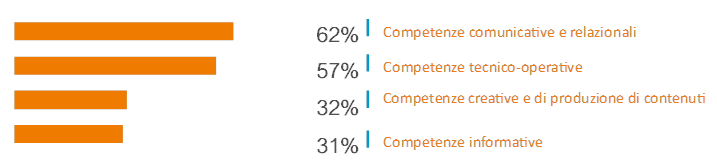
On average, adolescents reported knowing very well how to do 65% of the activities on
digital communication and interaction, but only 37% of the activities related to information
and navigation.
Communication and interaction skills
Technological and operational skills
Content creation and production skills
Information and navigation skills
Knowledge items*
Self-reported performance on skills increases with age except
for content creation and production skills.
Boys had on average 43% of information and navigation skills
compared to girls who had 31% of these skills at a high level.
The average of correct answers to digital knowledge is
56%. The percentage of correct answers related to
digital knowledge is similar between boys and girls and
increases with age.
Respondents answered a set of
questions designed to measure their
actual knowledge about how the
internet and digital technologies work.
How digital literacy levels increase in adolescents who participated in three waves (2660)?
Considering both the self-reported skills and knowledge items reported in the three
waves, there is a similar improvement of the three dimensions below.
Less than half of the participants reported a high level of digital literacy* in content
creation and information and navigation.
Communication and interaction
Content creation and production
Information and navigation
* Digital literacy is a combination of digital skills and
knowledge regarding how the internet and digital
technologies work.
The levels of digital literacy are a merger of self-reported
high-level skills and the correct answer on the knowledge items.
For technological and operational skills digital literacy could not
be accounted for due to a lack of knowledge items.
Digital literacy increases with age.
In 2023, boys present higher digital literacy levels than girls in information and navigation
(49% to 40%).
Gender differences are narrow regarding content creation and production (boys: 49%;
girls: 48%) and communication and interaction (boys: 60%; girls: 61%).
Authors: Cristina Ponte, Susana Batista and Rita Baptista
This project has received funding from the European Union’s Horizon 2020 Research & Innovation programme under Grant Agreement no. 870612. The information in this deliverable reflects
Università Cattolica, oggi nel campus milanese il progetto europeo ySkills ha presentato i dati sulle competenze digitali dei minori
 By