

 (AGENPARL) - Roma, 6 Luglio 2026 - How women farmers are shifting to agroforestry to beat the heat and boost production
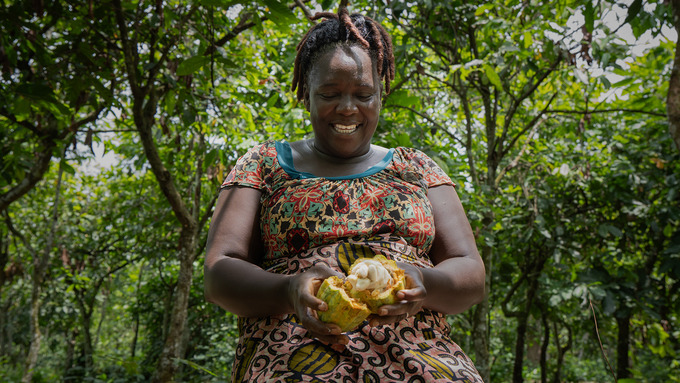
[cid:image002.jpg@01DD0D47.5B8BF180]©FAO/Candida Villa-Lobos
In the village of Ananguié, in southern Côte d'Ivoire, 46‑year‑old cocoa farmer Sylvie Sopie N'Gbesso moves through her two-hectare plot, machete in hand. Her arm swings like a pendulum as she slices through the dried leaves on the ground. She's doing what she calls the "nettoyage" – keeping her cocoa plot tidy and healthy.
Sylvie has transformed an ageing, full-sun cocoa plot into a thriving agroforestry system where shade, fruit and cocoa trees helped double her cocoa production from 1 000 kilos in 2023 to 2 000 kilos in 2025.
But there was a journey behind this success. She was once a fruit and vegetable vendor at a market in Abidjan, the nation's capital. As her family grew, so did her expenses. She knew she had to diversify her income to make ends meet and keep her kids in school, so she asked her father-in-law if she could use the family plot for cocoa farming. He agreed.
"I've been a cocoa farmer since I came here in 2003," says Sylvie. But in the beginning, "the trees didn't produce much."
Like most of the country's cocoa plots, the trees were exhausted following decades of full-sun, monoculture cultivation, which maximised short-term gains for farmers, but caused long-term soil degradation and biodiversity loss, ultimately also hurting productivity.
Over 40 percent of the world's cocoa – the main ingredient in chocolate – now comes from Côte d'Ivoire, but at a bitter price: more than 80 percent of the country's forests have been cleared, largely for cash crops like cocoa.
Deforestation has made the land hotter and drier, while drought, unpredictable rainfall and other effects of climate change have started shifting cocoa growing zones, half of which could be lost by 2050, according to a study by the European Commission.
But this is changing. The Government of Côte d'Ivoire has been taking steps to curb deforestation and safeguard cocoa – an income-generating crop for about one million smallholders – by helping farmers convert unsustainable, full-sun cocoa plots into shaded agroforestry systems.
In 2023, Sylvie heard about a project called Promoting zero-deforestation cocoa production for reducing emissions in Côte d'Ivoire (PROMIRE)