

 (AGENPARL) - Roma, 25 Luglio 2022 - (AGENPARL) – lun 25 luglio 2022 Prepared for an Electric Future Tenneco s DRiV Motorparts Business Committed
to Helping Distributors, Workshops Capture EV Parts and Service Opportunities
Five years ago, conversations about the advent of electric vehicles typically began with
If. Today they are centered around how fast the now-real shift to EVs will occur in
nations across Europe.
There s little doubt that the trend is real. With each model year, major OEMs together are shifting billions
of euros in product development resources toward battery electric (BEV) and hybrid (HEV) models,
leaving, for now, the commercial-vehicle segment as perhaps the final stronghold of internal combustion
engine (ICE) technology.
While this rapid shift has immediate implications for consumers and vehicle dealers, it will soon also begin
to affect the manner in which the aftermarket from parts manufacturers to workshop mechanics serves
its customers.
It also will likely change the nature of the relationship between consumers and their vehicle service
providers, which represents a significant opportunity for the aftermarket value chain. A recent study
indicated that the service waiting period for customers relying on vehicle dealerships has surpassed a full
day. Aftermarket providers who can provide faster service and greater convenience whether for an ICE
or EV will have a significant competitive advantage.
Every major change in automotive technology from rear-wheel drive to front-wheel drive and the
introduction of electronic fuel injection and engine controls was initially viewed as a threat to the
aftermarket, only to become a new source of industry growth, said Audrey Harling, Group Vice President
and General Manager, EMEA Aftermarket Motorparts for Tenneco s DRiV Motorparts group. There is a
similar opportunity in the shift to EVs, and we have no doubt that leading aftermarket suppliers, and
particularly DRiV, will help their business partners benefit from this trend.
What We Know.
Every EV-related opportunity is based on two distinct perspectives: What we know about the existing
vehicle population (both ICE and EV); and what we expect from each new generation of BEV and HEV
technology.
At the very top of the list of things we know is that, although electrification is dominating the headlines, ICE
vehicles continue to dominate European roads. In fact, recent data shows that despite of a 500% increase
1/5
PRESS RELEASE
in EV sales since 2019, ICE vehicles still comprise more than 98% of the passenger car population. This
massive share will decline only gradually over a period of several years.
We also know that today s ICE vehicles are better performing, longer lasting and more valuable as
personal assets than any earlier generation of passenger vehicles. Average vehicle age now exceeds 12
years overall and continues to rise thanks to a variety of factors: increased quality/durability; the rising cost
of new and used cars; and, at least temporarily, supply chain shortages that have reduced the availability
of new vehicles. Bottom line, existing parts and service opportunities tied to the ICE car parc will
likely remain strong well into the next decade.
Research also shows that while EVs will dramatically reduce demand for conventional engine
components, oil, gaskets and other parts, they are already increasing demand for replacement tires.
According to Trucks VC, a venture capital firm with investments in an array of mobility companies, EV
owners are returning to car dealers and the aftermarket for tire replacement 30% more frequently than the
owners of ICE vehicles.
This points to an important new opportunity for workshops and their suppliers to establish comprehensive
service relationships with the owners of battery-electric and hybrid vehicles. Tires, along with chassis and
brakes, will be the windows to these
opportunities.
What We Expect.
In addition to more frequent tire replacement, the weight and positioning of EV battery packs can exert
added stress on components in a variety of driving situations. This is good news for the aftermarket. In
fact, DRiV already offers more than 2,000 steering and suspension parts engineered specifically for hybrid
and battery-electric vehicles.
DRiV Motorparts is already addressing these issues to ensure that workshops have access to better-than-
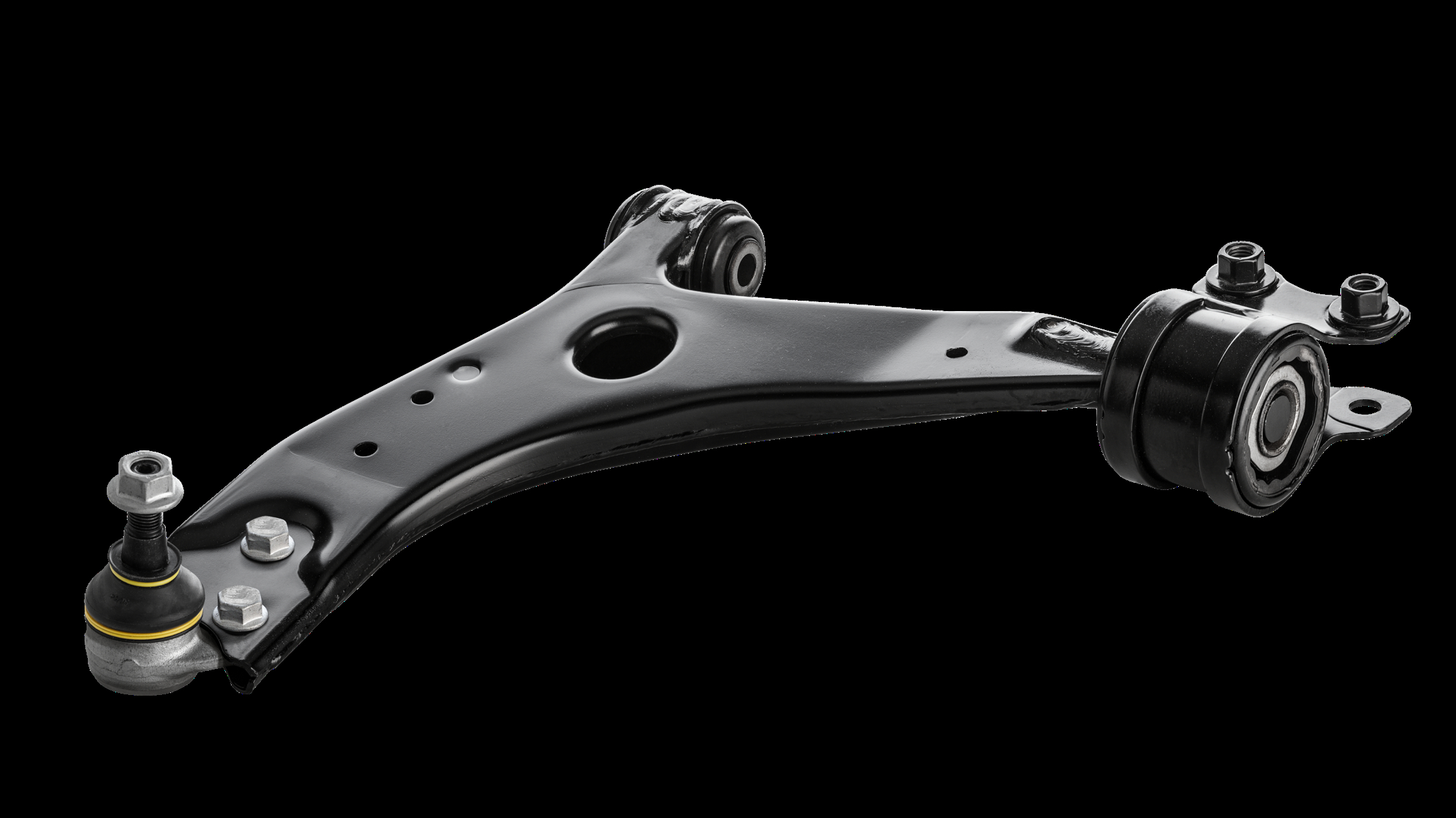
OE, problem-solving parts. These include MOOG track control arms manufactured from high-strength
aluminium materials combined with specialized surface treatments that further enhance strength and
durability. In addition, the steel used in the manufacture of many MOOG wishbones is up to 200%
stronger, leading to greater durability under the increased dynamic forces and other stresses
associated with many EVs.
Another important EV service trend is the increased likelihood of drivers to detect even faint noises
2/5
PRESS RELEASE
emanating from beneath their otherwise silent vehicles. This might spur increases in the replacement of
elastomeric bushings as well as a wide range of other steering and suspension products.
MOOG now utilizes an advanced, hybrid core bearing technology in many control arms, ball joints, tie
rod ends and axial joints that is ideally suited to EV and HEV applications. Not only does this technology
increase socket durability but it also provides smoother, more precise and quiet articulation of the internal
mating surfaces. Other advances, such as induction heat treatment of ball joint studs and sandblasting of
high-strength aluminum control arm housings to eliminate microscopic weaknesses also have been
incorporated into the MOOG product range to meet the increased demands of electrified vehicles.
Another important characteristic associated with any EV component is weight. MOOG product engineers
utilize finite element analysis and other technologies to help maximize weight savings without
compromising product strength and durability. The result is a best-case solution for each electric vehicle.
Monroe, another DRiV brand, illustrates the importance of a manufacturer s OE portfolio to future success
in the EV aftermarket. Both through its Monroe OE Solutions passive dampers used by several leading
EV manufacturers and Monroe Intelligent Suspension systems, Monroe is investing in products that will
ultimately redefine the aftermarket service experience. A few of the many recent EV models equipped
with Monroe OE technologies include the BMW iX3 and i4, SEAT Cupra and Volkswagen ID.3 and ID.4.
Braking Remains Strong
With the long-term reduction of oil changes and other services specific to ICE vehicles, brake service will
take on even greater prominence for workshops and their suppliers. While there has been some concern
raised about the reduction of friction wear due to regenerative braking, the reality is that the availability of
EV- and HEV-specific braking technologies will help independent workshops earn new customers at the
expense of OE dealers.
3/5
PRESS RELEASE
Once again, the key is to focus on what we know vs. what we expect. What we know is that, as with
steering and suspension parts, EVs place severe demands on brake system components. Due to the
weight of battery packs for example, EV brake pads often must provide greater stopping power.
Additionally, the significantly faster acceleration of EVs could increase the incidence of sudden, severe
stops again requiring high-performance stopping.
We also know that brake noise and vibration are leading causes of driver complaints to OE dealers and
independent workshops. Given the near-silent operation of battery-electric vehicles, brake squeal and
other noises will be far more obvious to the vehicle owners.
Another consideration with battery-electric and hybrid vehicle brakes is that regenerative braking places
is much tougher on the brake pads, said Silvano Veglia, Product Director, Braking EMEA for DRiV.
Because regenerative braking reduces the number of times the friction material contacts the brake disc,
the material often doesn t have a chance to reach an ideal operating temperature. This means the
friction formulation must provide greater consistency and stability across a comparatively wide thermal
window.
DRiV is one of the world s largest manufacturers of brake pads for all types of passenger vehicles. This
unique insight into the demands of today s EV brake technologies ultimately benefits the independent
workshops that rely on FERODO replacement pads, according to Gerhard Braun, DRiV Business Line
Leader, Braking, EMEA.
We offer coverage of 95% of battery-electric and hybrid vehicles in the European car parc through our
ECO-FRICTION and FUSE+ Technology brake pads, he said. This strong, early investment will help
ensure that when it s time for the first brake repair on an EV, workshops can win the business by choosing
FERODO.
Also key to successfully servicing EVs is using the proper brake fluid. The same characteristics affecting
brake pad design necessitate the use of highly specialized DOT 5.1 brake fluid, which offers higher dry
and wet boiling points, enhanced corrosion protection, lower conductivity, outstanding lubricity and low
viscosity. FERODO has already introduced a first-to-market DOT 5.1 fluid FERODO FBE050 to
4/5
PRESS RELEASE
help workshops provide top-quality repairs of these vehicles.
Bringing it All Home
Another thing we know today is that no matter how big or small the EV service opportunity might be in the
next few years, these vehicles represent a fundamental change for every workshop owner and mechanic.
This makes technical training long a vital area of value for DRiV customers via the Garage Gurus
platform more important than ever.
Garage Gurus is well aware of the challenges and emerging technologies in the automotive aftermarket,
and it is our mission to help workshop owners and mechanics succeed in this new future, said Marijn
Staal, senior manager, training and technical services, EMEA, Tenneco, and head of the Garage Gurus
team. Garage Gurus already has developed new training modules covering best practices for safely and
effectively serving alternative fuel vehicles, including battery-electric vehicles, hybrids and hydrogen-
fueled models. The team also continues to monitor emerging service requirements, common failure
modes and other issues related to these new vehicles.
Electrification will become a major opportunity for the contemporary mechanic, Staal said. The Gurus
program is here to inform, identify and support in all of these new areas.
5/5
PRESS RELEASE


